Latest Technology Mouse Video Must Watch
Showing posts with label Misc. Show all posts
Showing posts with label Misc. Show all posts
Sunday, January 22, 2012

The Latest Mouse Fortune Unborn Of Our Frequent Mouse

The dissimilar prevailing computer mouse which comparable a plain white box-like particular the two edition was the one where there was a mother board and consistently needs a mouse pad to be used.
I have seen lots of computer mouse many of mouse are available in market but this one different type of latest mouse it is very useful its shape design is totally different.
Then came the visual mouse in which the motherboard was apparent and a light which exemplify that the mouse was working but now here is newest concept in the mouse is a one where there is no motherboard.

This Mouse Fortune is wireless it seems stylish and it is available in pink color which looks excellent It is a glossy fragment , which I am sanguine all would like to posses I would to use this latest design mouse it is so nice and attractive.

This is the innovative technology of fantastic mouse I have seen first time its so different to other mouse its design and functionality is also not similar to other mouse but it is good for click anything very easily It still does have a bright light, which represent to insert to the entreaty.
Wednesday, January 11, 2012
Advanced Technology
In this article I am going to talk about the advanced green technology andadvanced green technology energy. The green technology or sustainable energy as it is also called is the technology which can take and use the renewable sources of energy such as the sun, wind, water, and so on and use them in order to produce electricity. The green technology is beneficial because it does not cause any damage on the environment, whereas the regular technology does. There are many ways in which we and the environment can benefit from using the green technology and I am going to present you these ways in what follows.
By using green technology we have the possibility of getting energy from variousrenewable sources which are not in the risk of getting depleted and which do not cause any harm to the environment. One of the best renewable energy sources is the sun. There is a big difference between the renewable and non-renewable energy sources. For example take the sun and the fossil fuels. We can use both of them but the fossil fuels do not replenish whereas the sun always does. There are other types of green technology as well. For example there are the wind turbines.

The wind turbines use the wind in order to produce energy and this is one of the most popular methods. The wind powered energy is the cleanest of them all: the cleanest to install, and to use because it does not cause a stir in the environment whatsoever. There are many people who use this source of energy for their homes which means that the advanced green technology is no longer designed just for the large companies, and so on. When used for a home there is the possibility of using smaller versions of the wind turbines, the mini wind turbines. They work on the same principle as the regular ones the only difference being in the size and in the energy they are able to produce. Even the smaller versions are capable of providing energy for an entire home though.

Another way of obtaining sustainable energy is by using the geothermal power through which the heating qualities of the earth are being used for providing electricity to the house. The best way of providing electricity to the homes through renewable methods is to use different sources of energy. You could use both the solar and the wind power or even of combination of three or more energy sources. Besides the benefits that you will bring to the environment by using these energy sources you will also save lots of money in the process because the bills that you will have to pay will be reduced.
Technology for Future

The concern of some centers of research for the improvement of Man-Machine and everything surrounding interface has become more noticeable. From a simple home appliance, to the most advanced medical equipment, sometimes, the true importance of technology is only seen through a friendly and well defined interface. The course of this last decade has been truly hallucinatory, with tremendous improvements not only functionality, whether interacting with a computer, or machine.
When we watched specific fiction films which we loved, aside from all the extra care in production they took to create in a us a "WOW" effect, we had some conscience that, aside from our will to accept what we were about to see, we were definitely before fiction that would exist in a world we were not part of. By chance, that world is not so distant when we judge it...
"Multiuser Interaction"
"Camuflagem Óptica"
HAL(Hybrid Assistive Limb) from Cyberdine
Monday, January 9, 2012
Top 10 Tech Inventions
an
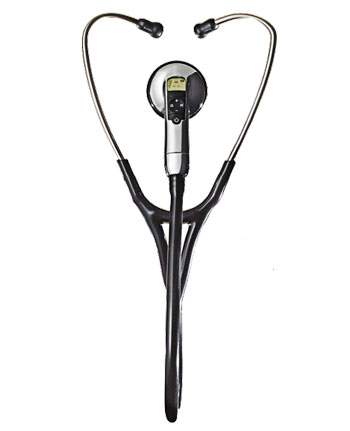
The stethoscope hasn’t undergone many significant breakthroughs until now. 3M’s new stethoscope listens to a patient’s heartbeat, captures the sound for later playback, lets you transmit sounds real-time to your PC, which can then be further analyzed, attached to medical records, or reviewed online with colleagues.
The sound-amplifying 3M Littmann Electronic Stethoscope 3200 will not only be able to catch dangerous murmurs and heart defects but will also eliminate more than eight million unnecessary echocardiograms and cardiologist visits a year, saving some $9.4 billion.
The sound-amplifying 3M Littmann Electronic Stethoscope 3200 will not only be able to catch dangerous murmurs and heart defects but will also eliminate more than eight million unnecessary echocardiograms and cardiologist visits a year, saving some $9.4 billion.
9. Android Phone

The Android has proven itself a force to be reckoned with, offering a legitimate alternative to the all-mighty iPhone. If you haven’t heard, Android is a Google-backed operating system for cell phones. The code is free, open-source and easy to alter. Users can create their own interfaces and control many kinds of hardware, plus it has over 10,000 Android apps.
8. The Smart Thermostat
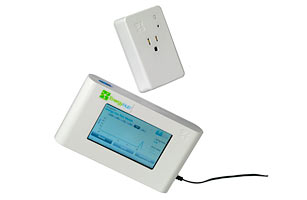
Called one of Time Magazine’s “best new gadgets” and “breakthrough ideas of the year”, the EnergyHub Dashboard is a device that lets you know exactly how much electricity (or gas) you’re using in your home and how much it’s costing you. It also turns appliances on or off and raises or lowers temperatures within your house depending on use. EnergyHub will be available direct to consumers in early 2010.
7. Robotic Exoskeleton
Still in its developing stages, powered exoskeletons are very clunky body suits designed to provide mobility assistance for aged and infirm people, giving them 10 times their normal strength. Similar to an Ironman suit, the military has also been working on their own version in order to assist and protect soldiers. Other possibilities for the exoskeleton include rescue work, such as in collapsed buildings. The device would allow a rescue worker to lift heavy debris, while simultaneously protecting the individual from falling rubble.
6. Microsoft Project Natal
Microsoft’s prototype system dubbed Project Natal is giving a whole new meaning to gaming: gaming with no controller at all. Your movements and voice control the game. The hardware component of the Natal system includes a color video camera, an infrared emitter and sensor that give it depth perception, a mic that figures out where you are, and a microprocessor to crunch all that data. The software component digests data in real time from 48 points on the body, plus audio input and delivers perfectly smooth game control.
5. XM25 Counter Defilade Target Engagement System (i.e. The Smart Bullet)

The XM25, currently under development for the U.S. military by Alliant Tech systems, allows soldiers to measure the distance to a target using a laser range finder, dials in exactly where the bullet should explode (over or past walls, the corner of buildings) at precise distances. At a cost of $30/round, the bullets are equipped with microchips capable of registering distance according to the number of times they’ve rotated.
4. Teleportation
Okay, so we won’t be seeing teleporting machines on the market for a while, but scientists at the University of Maryland’s Joint Quantum Institute successfully teleported data from one atom to another in a container a meter away. Atom-to-atom teleportation has major implications for creating super-secure, ultra-fast computers. Maybe one day, humans as well.
3. NASA Kepler Space Telescope
To boldly go where no man has gone before- but could potentially- NASA’s Kepler Space Telescope launched in March is tasked with searching habitable Earth-like planets in distant star systems. Using a photometer that’s more than three feet in diameter, Kepler is now continuously observing some 100,000 stars located between 600 and 3,000 light-years away. Scientists hope that Kepler could find dozens of habitable planets during its three-to-four-year mission.
2. The Electric Eye

MIT researchers are developing a microchip that will enable a blind person to recognize faces and navigate a room without assistance, helping the blind to regain partial eyesight. The chip, which is encased in titanium to prevent water damage, will be implanted onto a patient’s eyeball. Users are required to wear special glasses fitted with a small camera that transmits images to the titanium-encased chip, which fires an electrode array under the retina that stimulates the optic nerve. The glasses will help to power the coils surrounding the eyeball.
1. Sixth Sense
SixthSense is a wearable gestural interface that bridges the gap between intangible digital information and the tangible world. Using natural hand gestures to interact with information SixthSense is comprised of a pocket projector, a mirror and a camera which allows you to interact with objects in a way never before possible. You can take a picture simply by framing scenery with your hands or even hold up an object at a store and find out all relevant information about it. SixthSense essentially makes the entire world your computer.
Top 10 Classic Sneakers With Modern Technology

A number of trends have dominated the sneaker scene in the three years following the global financial meltdown: the proliferation of lifestyle sneakers, those designs and performance models done in monochromatic and tonal colorways, hybrid mashup models and performance-oriented upgrades for old favorites being just a handful of the underlying themes. It’s that last trend we’ve seen Nike Sportswear take to new levels with their huge archive of past classics, new designs like the Nike Lunar Flow, Air Max 90 Hyperfuse and Air Force 1 HYP all integrating the lightweight, breathable Fuse material into their long-established shapes. Complex has taken it upon themselves to rank The Top 10 Classic Sneakers with Modern Technology and include designs from adidas Originals and Jordan Brand on the list. Can you guess which is number 1? Click through to get a sampling, head to Complex for the full feature and leave a comment to let us know if you approve of the top ten rankings.


Sunday, January 8, 2012
Radio Frequency Identification
Simple RFID tags and implants can go a long way.
RFID tags can be made into wristbands or be used in everyday, common things...they can even be implanted into the skin. The technology is already used in various ways involving tracking, identification, and security. Maybe we can dig a little deeper and take advantage...
http://www.rfident.org/rfidnexus.htm
"...the core of that new prison, opened in 2006, is real-time RFID tracking. Prisoners wear bracelets that log their location as they move throughout the facility. Guards can monitor a sudden, suspicious gathering, and if prisoners enter a prohibited area, alarms will go off. RFID tracking, coupled with detailed records of who's visiting at a given time, could allow for simple, non-confrontational changes--such as rescheduling the family visits of rival gang members or sex offenders. RFID tracking also allows for quicker, less problematic prisoner counts, increasing response time for an escape, and reducing the number of lockdowns that can result from miscounts.

http://www.rfident.org/rfidnexus.htm
"...the core of that new prison, opened in 2006, is real-time RFID tracking. Prisoners wear bracelets that log their location as they move throughout the facility. Guards can monitor a sudden, suspicious gathering, and if prisoners enter a prohibited area, alarms will go off. RFID tracking, coupled with detailed records of who's visiting at a given time, could allow for simple, non-confrontational changes--such as rescheduling the family visits of rival gang members or sex offenders. RFID tracking also allows for quicker, less problematic prisoner counts, increasing response time for an escape, and reducing the number of lockdowns that can result from miscounts.
So far, Arizona-based Alanco Technologies has installed three of its TSI Prism RFID tracking systems in the U.S. (demo pictured above). The Sacramento County Youth Detention Center in California is adopting the system to track its 500 juvenile inmates. Once operational, the staff will be able to assign the correctional equivalent of restraining orders to individual prisoners: If the two RFID-tagged bracelets come within a given distance of each other, an alarm will sound in the control room."
Motorola H500 Review

Motorola is one among the leading pioneers involved in the development of Bluetooth enabled devices. The company has introduced devices that utilize the Bluetooth technology in their products like mobile phones and related accessories. The most used and popular mobile accessory based on Bluetooth at present is the Bluetooth based headset. Many manufacturers have started designing Bluetooth headsets and hence thee are more than hundreds of models in the market. These devices are of various styles, designs and colors. Motorola offers a variety of headsets of which some are more popular and attractive. The H500 Bluetooth headset from the company is the successor of the HS820 model.
Tracked Chassis for Arduino: Dagu Rover5
Features and Characteristics
The Dagu Rover 5 Tracked Chassis is a interesting and inexpensive tracked chassis. Unlike most of the tracked chassis, the Rover 5 allows you to adjust the clearance. The chassis is compatible with Pololu's expansion plates for the RP5 chassis. These plates are ideal for mounting hardware on the chassis (Arduino board).


This chassis has other interesting options, like adaptors allowing standard RC car wheels to be fitted. In its standard version the chassis comes with two motors and gearboxes, but it can be upgraded to 4 motors and gearboxes making it ideal for FINGERTECH omniwheels.


Also a PCB specifically designed allows Arduino boards (Diecimila, Duemilanove, Nano and Mega) to mount easily on the chassis. This PCB includes power supply, motor drivers with current sensing, IR sensors on each corner, 2 small breadboards, a pan/tilt kit with IR compound eye and a large prototype area under the breadboards where custom circuitry can be fitted.
Pricing
The Dagu Rover 5 Tracked Chassis is a interesting and inexpensive tracked chassis. Unlike most of the tracked chassis, the Rover 5 allows you to adjust the clearance. The chassis is compatible with Pololu's expansion plates for the RP5 chassis. These plates are ideal for mounting hardware on the chassis (Arduino board).


This chassis has other interesting options, like adaptors allowing standard RC car wheels to be fitted. In its standard version the chassis comes with two motors and gearboxes, but it can be upgraded to 4 motors and gearboxes making it ideal for FINGERTECH omniwheels.


Also a PCB specifically designed allows Arduino boards (Diecimila, Duemilanove, Nano and Mega) to mount easily on the chassis. This PCB includes power supply, motor drivers with current sensing, IR sensors on each corner, 2 small breadboards, a pan/tilt kit with IR compound eye and a large prototype area under the breadboards where custom circuitry can be fitted.
Pricing
Amazingly Tiny QuadRotor: Daedalus CrazyCopter
The quadrotor itself is organised around the main CPU. The job of this CPU is to acquire the physical measurement given by the gyroscopes and accelerometers and to control the motors to keep the copter stable. This is done by a regulation loop which controls the motors speed 250 times per second.

The computer runs control and telemetry programs. The control program reads the input from a game-pad and sends control commands to the copter. There are programs that can configure the quadrotor regulation parameters and log the measurements in order to make easier to tune the regulation.
The top of the board contains the sensors and the control/communication electronic:
About power supply:

The idea with the step-up was to get a more stable voltage when the battery is depleted and also to remove some of the noise coming from the motor electonic. Anyway, this boars is capable to work without by using 2.8V linear regulators instead.
The motors and propellers are taken from a Silverlit X-twin plane. They are powered by the battery voltage.
The distance between the motors (horizontally and vertically) is around 8 cm and the total weight is around 20 g.

The computer runs control and telemetry programs. The control program reads the input from a game-pad and sends control commands to the copter. There are programs that can configure the quadrotor regulation parameters and log the measurements in order to make easier to tune the regulation.
The top of the board contains the sensors and the control/communication electronic:
- The JTAG/Serial connector permit to program the processor and to communicate debug messages.
- The Main CPU is a STM32 Cortex-M3. It is clocked at 64MHz from the internal oscillator.
- The 2 Axis X-Y Gyro is an invensense IDG500.
- The 1 Axis Z gyro is an invensense ISZ500.
- The 2.4GHz Radio is based on an RF24L01+ chip from Nordic Semiconductor. It is actually a breakout board sold by SparkFun. The radio is connected to the CPU via a SPI port.
- The 3 Axis Accelerometer is a SMB380 from Bosch. It is connected to the CPU via an I²C bus.

About power supply:
- The charge connector accepts 5V and permits to charge the battery
- The power switch permits to power the copter either from the charge connector or from the battery.
- The 5V step-up permits to increase the power voltage from the 3~4V coming from the battery to 5V.
- The two 3.3V linear regulators, reduces the 5V to power the copter electronic. The digital and analog 3.3V are generated independently. This was made to reduce the noise on the analog components.
- Finally at the four sides there are the motors transistors. The power for the motors pass on the top and bottom of the part of PCB that hold the motors.
- The battery charging chip is just at the right of the 3.3V regulators. It is a classical MAX1555.

The idea with the step-up was to get a more stable voltage when the battery is depleted and also to remove some of the noise coming from the motor electonic. Anyway, this boars is capable to work without by using 2.8V linear regulators instead.
The motors and propellers are taken from a Silverlit X-twin plane. They are powered by the battery voltage.
The distance between the motors (horizontally and vertically) is around 8 cm and the total weight is around 20 g.
Inexpensive Hexapods - Solutions
An hexapod is a mechanical device that walks on six legs. Since a robot is more stable on three or more legs, an hexapod has a great deal of flexibility in how it can move. If some legs become disabled, the robot may still be able to walk. Furthermore, not all of the robot's legs are needed for stability; other legs are free to reach new foot placements or manipulate a payload.
Hexapod Simulation
Choosing an Hexapod: Money, The Sinews of War
When you are looking for an Hexapod kit, you soon realize that it is very difficult to stay below 1.000,00 € and personally this kind of amount is, at the bare minimum, non negligible. On the other hand, hexapods are quite appealing, either technically or visually (I mean that these bots are really freaking cool) so I looked for more affordable solutions.
If a problem is complex, one must decompose it into simpler problems
An Hexapod consists of three main parts, the chassis (the mechanical part), the controller (the electronic part), and the servo-motors (the motorization). The idea being here to find the better price/performance for each part.
A. The Chassis.
I retained 3 chassis which seem interesting for their price and the fact that they are all 3 DOF kits.
A1. MSR-H01 Hexapod Robot Kit from MicroMagic Systems. The favorite.
The MSR-H01 is a 3 DOF hexapod kit consisting of 26 aluminum body and leg components in one of three anodized colors, Silver, Red or Black. The kit comes with all screws, stand-offs, nuts and bolts for assembly.

 There are mounting holes on the top body plate for the controllers. With the controler mounted inside the body, there is plenty of room on top of the body for a 5 cell AA battery pack and additional electronics. This kit has been designed to fit the karbonite gear HS-65HB servo from Hitec. It is also possible to use the HS-65MG version.
This kit is worth around 65.00 € and can be ordered at Microsystem Magic . The chassis is really not expensive, one could nearly argue that it is not expensive enough. As you will see later, controler and servor-motors also represent a important part of the final budget. It is maybe not that a good idea to buy such a low cost chassis.
A3. The Phoenix Hexapod. The expensive
The Phoenix Hexapod Robot has a design very similar to the MSR-H01 (see above) or vice versa. The robot has been designed to use 18 Hitec HS-645 servos for the legs. The kit includes everything you need to build the robot mechanics
with the exception of 6 x ASB-04 pairs (Servo Bracket).

The kit is worth between 260.00 and 300.00 € depending where you order it and if you include aluminium servo brackets. it can be ordered in different online stores (LynxMotion, RobotShop, NoDna,...Google is your friend)
B. The Controller
The controller is a small computer on a single integrated circuit containing a processor core, memory, and programmable input/output peripherals. Controllers are designed for embedded applications, in contrast to the microprocessors used in personal computers or other general purpose applications.
B1. MondoMatrix
MondoMatrix is an easy to use open hardware platform. The MondoMatrix system is controlled by a main controller, the Displayduino controller which is like the popular Arduino controller except Displayduino controllers can connect to MondoMatrix expansion boards and are able to control up to 64 servo motors.
Displayduino works exactly like Arduino and uses the Arduino Programming Language. This means that programming the Displayduino microcontroller is the same as programming an Arduino Microcontroller. Displayduino Arduino Adapter fit right on top of any Displayduino main controller. It allows Displayduino users to take advantage of the ever expanding Arduino Shields by simply plugging them in.


ServoMatrix is a MondoMatrix expansion board that can control up to 64 Servo Motors. Each servo can have positions between 0 and just over 200. One of the most powerful features of ServoMatrix is that you can have up to 8 different kinds of servos controlled by a single board. The reason is that each row of eight servos has an independent power port. All of the power servo ports can be connected to one power source or each row of eight servos can have independent power sources.
The motherboard with the ServoMatrix and the Arduino Adapter will cost you a maximum of 220.00 €.
More information about MondoMatrix - DisplayDuino - ServoMatrix HERE
B2. Fez Domino - SSC-32 servo controller
The FEZ domino is a tiny open source board running Microsoft .NET Micro Framework. This means, you can write code with much more efficiency using C# programming language under free Microsoft Visual C# express. Many libraries are already included like FAT file system, threading, UART, SPI, I2C, GPIO, PWM, ADC, DAC and many more.
You can see that FEZ Domino's outline looks similar to Arduino Uno / Duemilanove. The reason for this compatibility is that many shields already exist for the Arduino board. TinyCLR.com offers several shields (Ethernet, Display, Motor Driver, etc.) that are fully tested and supported with FEZ Domino. Furthermore, with the FEZ Domino Expansion shield and onboard extension header, the user can easily add extensions and components. This allows FEZ Domino to remain simple yet extremely flexible. 

B3. Pico-ITX PC Board.


Hexapod Simulation
Choosing an Hexapod: Money, The Sinews of War
When you are looking for an Hexapod kit, you soon realize that it is very difficult to stay below 1.000,00 € and personally this kind of amount is, at the bare minimum, non negligible. On the other hand, hexapods are quite appealing, either technically or visually (I mean that these bots are really freaking cool) so I looked for more affordable solutions.
If a problem is complex, one must decompose it into simpler problems
An Hexapod consists of three main parts, the chassis (the mechanical part), the controller (the electronic part), and the servo-motors (the motorization). The idea being here to find the better price/performance for each part.
A. The Chassis.
I retained 3 chassis which seem interesting for their price and the fact that they are all 3 DOF kits.
A1. MSR-H01 Hexapod Robot Kit from MicroMagic Systems. The favorite.
The MSR-H01 is a 3 DOF hexapod kit consisting of 26 aluminum body and leg components in one of three anodized colors, Silver, Red or Black. The kit comes with all screws, stand-offs, nuts and bolts for assembly.

There are mounting holes on the top body plate for the controllers, with the electronics mounted underneath the top body plate, there is still enough room within the body for a 5 cell Sub-C battery pack. At the front of the hexapod there is a servo mounting point for an optional pan/tilt head.
This kit is worth around 145.00 € (which certainly represents a good quality/price ratio) and can be ordered at Microsystem Magic
A2. MSR-µBug Micro Hexapod Robot Kit. The low-cost.
MSR-µBug is a 3 DOF micro sized hexapod kit consisting of 35 acrylic body and leg components including two head options, pan only or pan and gripper, in one of three colours, #34BBE3, white or black. The kit comes with all screws, stand-offs, nuts and bolts for assembly. The µBug measures approximately 240mm long and 190mm wide in its neutral position.

This kit is worth around 65.00 € and can be ordered at Microsystem Magic . The chassis is really not expensive, one could nearly argue that it is not expensive enough. As you will see later, controler and servor-motors also represent a important part of the final budget. It is maybe not that a good idea to buy such a low cost chassis.
A3. The Phoenix Hexapod. The expensive
The Phoenix Hexapod Robot has a design very similar to the MSR-H01 (see above) or vice versa. The robot has been designed to use 18 Hitec HS-645 servos for the legs. The kit includes everything you need to build the robot mechanics
with the exception of 6 x ASB-04 pairs (Servo Bracket).

The robot is made from T6 aluminum components that are either bright dip Blue or Red anodized or jet black anodized. The Tibia and Femur parts are made from 0.125" thick material, and the chassis parts are made from 0.063" thick material.
The kit is worth between 260.00 and 300.00 € depending where you order it and if you include aluminium servo brackets. it can be ordered in different online stores (LynxMotion, RobotShop, NoDna,...Google is your friend)
B. The Controller
The controller is a small computer on a single integrated circuit containing a processor core, memory, and programmable input/output peripherals. Controllers are designed for embedded applications, in contrast to the microprocessors used in personal computers or other general purpose applications.
B1. MondoMatrix
MondoMatrix is an easy to use open hardware platform. The MondoMatrix system is controlled by a main controller, the Displayduino controller which is like the popular Arduino controller except Displayduino controllers can connect to MondoMatrix expansion boards and are able to control up to 64 servo motors.
Displayduino works exactly like Arduino and uses the Arduino Programming Language. This means that programming the Displayduino microcontroller is the same as programming an Arduino Microcontroller. Displayduino Arduino Adapter fit right on top of any Displayduino main controller. It allows Displayduino users to take advantage of the ever expanding Arduino Shields by simply plugging them in.

DisplayDuino Motherboard

The ServoMatrix
ServoMatrix is a MondoMatrix expansion board that can control up to 64 Servo Motors. Each servo can have positions between 0 and just over 200. One of the most powerful features of ServoMatrix is that you can have up to 8 different kinds of servos controlled by a single board. The reason is that each row of eight servos has an independent power port. All of the power servo ports can be connected to one power source or each row of eight servos can have independent power sources.
The motherboard with the ServoMatrix and the Arduino Adapter will cost you a maximum of 220.00 €.
More information about MondoMatrix - DisplayDuino - ServoMatrix HERE
B2. Fez Domino - SSC-32 servo controller
The FEZ domino is a tiny open source board running Microsoft .NET Micro Framework. This means, you can write code with much more efficiency using C# programming language under free Microsoft Visual C# express. Many libraries are already included like FAT file system, threading, UART, SPI, I2C, GPIO, PWM, ADC, DAC and many more.
You can see that FEZ Domino's outline looks similar to Arduino Uno / Duemilanove. The reason for this compatibility is that many shields already exist for the Arduino board. TinyCLR.com offers several shields (Ethernet, Display, Motor Driver, etc.) that are fully tested and supported with FEZ Domino. Furthermore, with the FEZ Domino Expansion shield and onboard extension header, the user can easily add extensions and components. This allows FEZ Domino to remain simple yet extremely flexible.
Not to forget that FEZ Domino has extra 8 IOs at the UEXT connector and the USB host, USB device, SD card are all connected directly to the processor and so using those will not reduce your free IO count. Note that all digital/analog pins, PWM, COM1 and SPI are in the same place, other peripherals can be different. For example FEZ Domino provides three serial ports that are available for developers. Arduino only has one and it is used for debugging

The FEZ Domino

SSC-32 Controller
This servo controller has 32 channels of 1uS resolution servo control, including bidirectional communication with query commands, synchronized, or "group" moves. It is weel documented and many tutorials exist on the Internet. This controller can control 32 servos over just 1 serial line (TTL or USB-serial).
The FEZ Domino and the SSC-32 controller will cost you around 100.00 €
B3. Pico-ITX PC Board.
A Pico-ITX is a PC motherboard form factor introduced by VIA Technologies in January 2007. The Pico-ITX form factor specifications call for the board to be 10 x 7.2 cm (3.9 x 2.8 in) , which is half the area of Nano-ITX. The processor can be a VIA C7, a VIA Eden V4, a VIA Nano, Intel Atom, AMD Geode... or any other that uses VIA's NanoBGA2 technology for speeds up to 1.5 GHz, with 128KB L1 & L2 caches. It uses DDR2 400/533 SO-DIMM memory, with support for up to 1GB. Video is supplied via AGP by VIA's UniChrome Pro II GPU with built-in MPEG-2, 4, and WMV9 decoding acceleration.

There are many solutions available on the market, one example here: the PICO820-Z530.
These boards range from 300.00 € to ....Steatite Embedded seems to offer a large range of products but a lot of other e-shops are present on Internet.
Of course, even with such board, you will still need a SSC-32 controller (or equivalent) which make the global "controller" budget around 450.00 €, but at this price you get a complete PC running windows XP or Linuxembedded in your hexapod. This open very interesting possibilities when it comes to software development.
B4. Just another two options, the Roboard RB-100 and the Fox Board G20
They are certainly worth the click to their respective page...Roboard RB-100 seems a little bit expensive, but theFox Board just looks like a winner, especially if you like Linux.
C. The RC Servo-Motors
RC servos are composed of an electric motor mechanically linked to a potentiometer. A controller sends Pulse-width modulation (PWM) signals to the servo. The electronics inside the servo translate the width of the pulse into a position. When the servo is commanded to rotate, the motor is powered until the potentiometer reaches the value corresponding to the commanded position.

They are three main properties (except the price) you should pay attention when comparing RC servo:
- Torque: a measurement of the strength of a servo. Torque is determined by multiplying the force acting on the servo arm by the distance from the center of the servo.
- Speed: defined as the minimum amount of time it takes the servo arm to rotate 60 degrees at maximum rated torque
- Material: From nylon to Titanium. Not exactly the same price... ;-))
They are too many product to make a list here.
Just pay attention that in an hexapod, all servo do not bear the same constraints. Other point, you will need at least 18 of them, take you time to seach the right product at the right price. These can easily vary from simple to triple.
Just pay attention that in an hexapod, all servo do not bear the same constraints. Other point, you will need at least 18 of them, take you time to seach the right product at the right price. These can easily vary from simple to triple.
D. Last words...
It already exists a lot of information on internet about such projects. Do not hesitate to search and to search again. Just to help you a little bit, below three projects, one around the Displayduino, one around the FEZ domino and the last one is just a simulation, should give you additional piece of information...
Subscribe to:
Posts (Atom)
